CHAKWISE Wisdom-Driven Investment Advisory
← Back to Home
Research & Market Intelligence

All Investment Insights & Briefings

Objective evaluations of UAE property structures, capital allocation frameworks, and sovereign market dynamics.

Dubai Creek Capital Allocation Without The Noise
Market Intelligence & Macro

Dubai Creek Capital Allocation Without The Noise

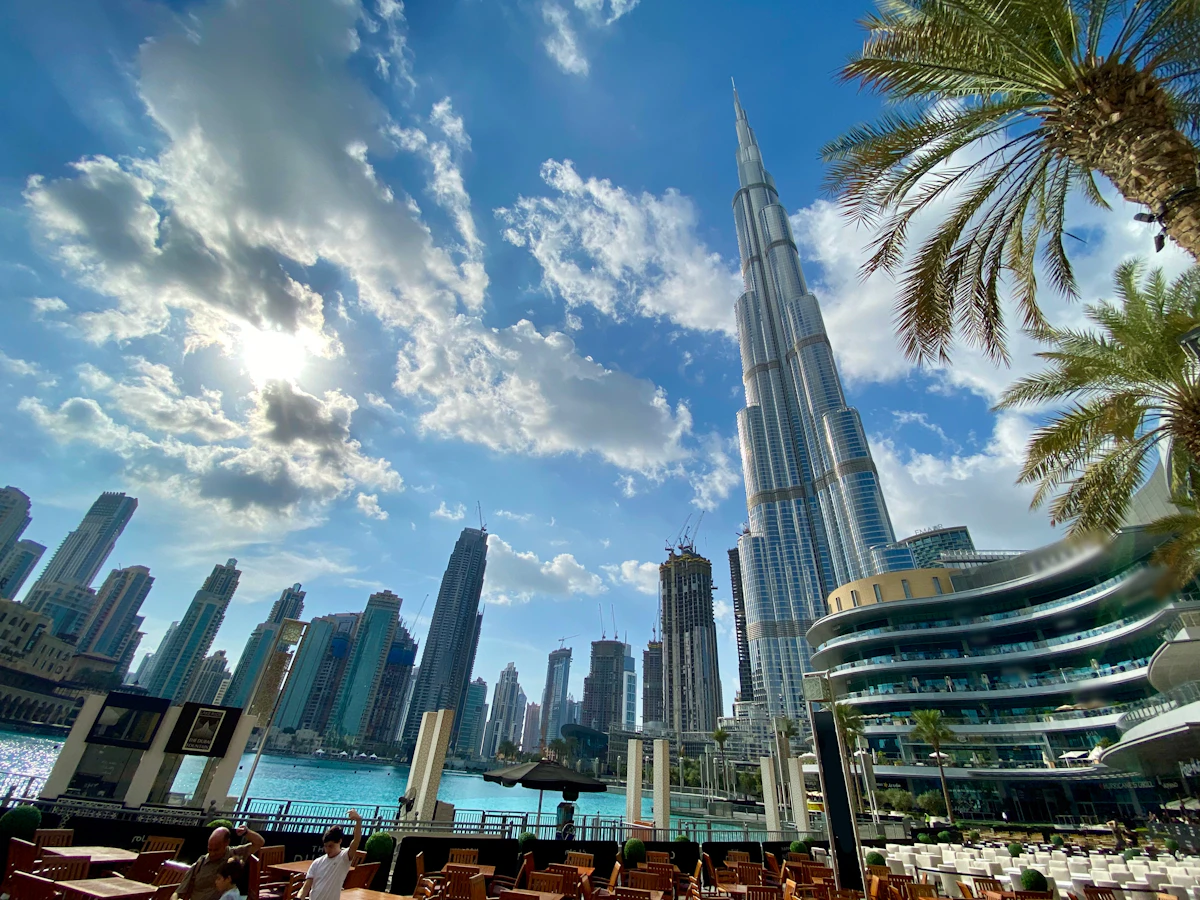
Navigating Dubai Creek master communities requires looking beyond surface aesthetics to evaluate long-term capital preservation, holding costs, and secondary market liquidity. For international families securing generational assets, understanding the true trade-offs between waterfront density and quiet community positioning is vital for sustainable wealth compounding. [image: https://images.unsplash.com/photo-1546412414-e1885259563a?auto=format&fit=crop&w=1200&q=80 | center | Market Context Caption] Key Takeaways: - Prioritise community maturity over initial architectural appeal. - Factor in long-term holding costs and service charge trajectories. - Evaluate secondary market exit depth before capital commitment.

Evaluating Branded Residences in Dubai
Market Intelligence & Macro

Evaluating Branded Residences in Dubai

Discerning families evaluating branded residential assets in the UAE often weigh intangible prestige against long term liquidity and fundamental capital preservation. Understanding how branded developments perform across economic cycles requires looking beyond surface aesthetics to examine real structural trade-offs. [image: https://images.unsplash.com/photo-1546412414-e1885259563a?auto=format&fit=crop&w=1200&q=80 | center | Market Context Caption] Key Takeaways: - Branded residences carry distinct management structures that impact long term holding costs. - Secondary market liquidity varies significantly compared to unbranded prime stock. - Service charges and maintenance frameworks dictate net yield stability over decades. - Macroeconomic factors in the UAE favor enduring lifestyle migration over short term speculation.

Institutional Capital Flows: Dissecting the Apollo and Mubadala Capital Real Estate Convergence
Capital Allocation & Ownership

Institutional Capital Flows: Dissecting the Apollo and Mubadala Capital Real Estate Convergence

Institutional real estate allocations across the UAE are entering a more sophisticated phase, moving away from retail-driven hype and toward complex, cross-border corporate partnerships. Recent market reports indicate that global investment giant Apollo Global Management is finalizing negotiations to acquire strategic stakes in Abu Dhabi-backed Mubadala Capital. For discerning private wealth investors deploying capital into the GCC, this development signals a structural maturation of the region's financial architecture, blending private equity heft with sovereign-backed asset curation. [image: /uploads/dubai-financial-district-aerial.jpg | center | Strategic institutional capital continues to reshape the commercial and residential asset landscape across the UAE.] At CHAKWISE, our advisory framework is built on separating noise from fundamental asset value. When alternative asset managers of Apollo's scale syndicate capital alongside sovereign wealth vehicles like Mubadala, it fundamentally alters liquidity profiles, yield compression expectations, and asset valuations. Understanding this transaction requires looking past the headline valuation metrics to evaluate what it means for secondary market liquidity, prime asset pricing, and risk-adjusted returns across the broader UAE property portfolio.

Jumeirah Garden City Dubai: An Institutional Assessment of Urban Renewal Realities
Capital Allocation & Ownership

Jumeirah Garden City Dubai: An Institutional Assessment of Urban Renewal Realities

Jumeirah Garden City remains one of Dubai's most ambitious yet protracted urban master-planning initiatives. Originally conceived as a mixed-use mega-development aimed at reshaping the corridor between Sheikh Zayed Road and Jumeirah, the district's evolution has been defined by phased rollouts, shifting master plans, and fragmented plot ownership. For institutional and high-net-worth capital, navigating this sub-market requires cutting through marketing narratives to examine ground-level infrastructure execution, land-bank liquidity, and actual absorption rates. [image: /uploads/jgc-masterplan-overview.jpg | center | Aerial overview of the Jumeirah Garden City corridor highlighting proximity to established arterial networks.] At CHAKWISE, our advisory mandate is to replace speculative enthusiasm with rigorous fundamental analysis. While the district benefits from an undeniably prime central location—bridging Downtown Dubai, Business Bay, and the coastal Jumeirah residential belt—investors must evaluate whether current asset valuations adequately price in ongoing construction density, traffic externalities, and varying delivery timelines across individual plots.

Disney Abu Dhabi on Yas Island: An Institutional Underwriting and Capital Preservation Analysis
Opportunities

Disney Abu Dhabi on Yas Island: An Institutional Underwriting and Capital Preservation Analysis

As the Chief Investment Officer for CHAKWISE, founded by Chakravarthy Natarajan Santhakumar, our macro underwriting desk focuses on structural asset catalysts rather than speculative retail noise. The formal announcement of Disney Abu Dhabi on Yas Island represents a monumental paradigm shift for the capital emirate, transitioning Yas Island from a regional entertainment hub into a Tier-1 global tourism ecosystem. For institutional allocators and high-net-worth investors seeking a robust capital preservation framework, this master-planned leisure anchor introduces unprecedented demand fundamentals for surrounding residential micro-markets. However, disciplined underwriting requires looking past the thematic hype to evaluate true supply absorption, off-plan handover exposure, and long-term asset performance. [image: https://images.unsplash.com/photo-1580674684081-7617fbf3d745?auto=format&fit=crop&w=1200&q=80 | center | Yas Island master development integration and regional entertainment expansion under institutional review.] Historically, announcements of mega-attractions trigger a wave of off-plan launches characterized by aggressive pricing and optimistic yield assumptions. At CHAKWISE, we subject these capital deployments to a rigorous net yield stress test. While the proximity to Ferrari World, Etihad Arena, and the upcoming Disney destination guarantees sustained short-term rental demand and strong tourist footfall, investors must carefully analyze service charge erosion and secondary market liquidity once the initial construction wave reaches completion. This report provides an exhaustive, institutional-grade evaluation of Yas Island residential assets, contrasting developer marketing narratives with cold, empirical financial models.

Sharjah Freehold Expansion and University City Corridor: An Institutional Net Yield Stress Test
Capital Allocation & Ownership

Sharjah Freehold Expansion and University City Corridor: An Institutional Net Yield Stress Test

As institutional and private capital continuously evaluates high-performing secondary corridors within the United Arab Emirates, the Sharjah Real Estate Registration Department (SRERD) freehold policy expansions present an intriguing alternative to saturated metropolitan cores. Situated immediately adjacent to the prestigious University City of Sharjah, emerging master-planned developments by leading master developers such as Arada are capturing significant rental demand driven by academic staff, medical professionals, and students. However, transitioning from headline gross yields to sustainable risk-adjusted returns requires a rigorous capital preservation framework. Investors must navigate distinct operational nuances, including localized service charge structures, leasehold conversion histories, and secondary market liquidity constraints that differ markedly from neighboring Dubai sub-markets. [image: https://images.unsplash.com/photo-1580674684081-7617fbf3d745?auto=format&fit=crop&w=1200&q=80 | center | Analytical evaluation of the Sharjah educational corridor master communities and freehold boundary expansions.] At CHAKWISE, our proprietary underwriting models highlight that while entry prices in Sharjah offer compelling price-to-rent spreads compared to Downtown Dubai or Dubai Marina, off-plan handover exposure and service charge erosion can quickly compress net operating incomes if not modeled conservatively. The strategic integration of the University City corridor provides a defensive moat, insulating assets from severe vacancy spikes during broader economic downturns. Yet, prudent investors must execute a comprehensive net yield stress test, accounting for transaction frictions, escrow account security, and the timeline for secondary market liquidity maturation. This analysis deconstructs the fundamental drivers, quantitative metrics, and downside risks defining the Sharjah freehold investment thesis today.

RERA Rental Index Recalculations: Underwriting Secondary Market Yields and Cap Rate Expansion
Opportunities

RERA Rental Index Recalculations: Underwriting Secondary Market Yields and Cap Rate Expansion

The Dubai real estate ecosystem is undergoing a structural transition as the Real Estate Regulatory Agency (RERA) updates its rental calculator to mirror spot market values more accurately. For institutional allocators and private wealth clients at CHAKWISE, this regulatory intervention demands an immediate net yield stress test. Historically, legacy rental index caps insulated tenants from market spikes, creating a wide spread between contracted rents and prevailing spot valuations. Recent algorithmic adjustments by RERA are compressing this spread, accelerating landlord adjustments but also introducing severe friction for secondary market liquidity. As properties face abrupt repricing upon lease renewals, cap rates are expanding across mature master communities like Dubai Marina and Downtown Dubai. Investors relying on historical yield projections must now factor in aggressive service charge erosion, property management overheads, and the shifting dynamics of tenant retention. Concurrently, acquiring secondary assets requires a rigorous capital preservation framework to ensure that rising rental baselines do not mask underlying structural liabilities or deteriorating building maintenance standards. This analysis examines the financial implications of the updated RERA indices, providing a quantitative blueprint for underwriting existing residential assets against shifting regulatory parameters and macroeconomic realties in the UAE property market. [image: https://images.unsplash.com/photo-1512453979798-5ea266f8880c?auto=format&fit=crop&w=1200&q=80 | center | RERA rental index recalculations reshape secondary market yields and cap rate expansions across mature Dubai communities.]

Indian RBI LRS Outflows to Abu Dhabi: Underwriting Saadiyat Cultural District Off-Plan Assets
Residency, Policy & Tax

Indian RBI LRS Outflows to Abu Dhabi: Underwriting Saadiyat Cultural District Off-Plan Assets

As global wealth managers navigate tightening fiscal perimeters, Indian ultra-high-net-worth individuals are increasingly utilizing the Reserve Bank of India Liberalised Remittance Scheme to channel capital into the UAE property market. Rather than chasing crowded districts in Dubai, institutional family offices from Mumbai and New Delhi are targeting Abu Dhabi, specifically the Saadiyat Cultural District. Driven by landmark developments including the Louvre Abu Dhabi, the upcoming Guggenheim, and elite international curriculum schools, this micro-market offers a unique capital preservation framework. However, deploying cross-border capital under strict LRS annual caps requires rigorous macro underwriting. Investors face nuanced currency friction, complex escrow account security mechanics, and the looming risk of service charge erosion. To safeguard capital against INR depreciation and regulatory shifts, an objective net yield stress test is paramount before committing to long-term off-plan payment structures. At CHAKWISE, founded by Chakravarthy Natarajan Santhakumar, our mandate is to strip away developer marketing noise and evaluate true fundamental asset performance. [image: https://images.unsplash.com/photo-1512453979798-5ea266f8880c?auto=format&fit=crop&w=1200&q=80 | center | Macro analysis of cross-border capital deployment into Abu Dhabi prime real estate.]

Dubai South Al Maktoum Expansion: An Institutional Underwriting and Off-Plan Handover Payment Plan Stress Test
Opportunities

Dubai South Al Maktoum Expansion: An Institutional Underwriting and Off-Plan Handover Payment Plan Stress Test

As the Dubai Land Department records an unprecedented surge in transaction volumes across emerging corridors, institutional focus is shifting rapidly toward the Dubai South Al Maktoum International Airport expansion. This massive aviation overhaul, coupled with phased infrastructure deployment, has triggered a wave of speculative off-plan launches. For family offices and private wealth allocators, navigating this ecosystem demands rigorous analysis, particularly as aggressive post-handover payment plans mask underlying structural risks. At CHAKWISE, founded by Chakravarthy Natarathy Santhakumar, our autonomous sniffer framework has intercepted a critical vulnerability in current developer offerings across Dubai South. While the macro narrative of a multi-runway mega-hub promises long-term capital appreciation, short-term liquidity dynamics tell a starkly different story. Investors are increasingly exposed to off-plan handover exposure where minor delays in municipal utility connections can severely disrupt cash flow projections. Furthermore, the interplay between strict escrow account security and developer cash management practices requires deep forensic evaluation. We must subject every prospective asset to a rigorous net yield stress test, stripping away developer marketing fluff to reveal the true cost of entry. Global capital seeking safe harbor from shifting tax regimes abroad must remain vigilant against compressed rental yields driven by an imminent wave of hyper-supply. [image: https://images.unsplash.com/photo-1545324418-cc1a3fa10c00?auto=format&fit=crop&w=1200&q=80 | center | Aerial view of Dubai South aviation and master-planned infrastructure corridors under active development.]

UK Non-Dom Expatriation: Navigating UAE Real Estate as an Offshore Tax Shield
Market Intelligence & Macro

UK Non-Dom Expatriation: Navigating UAE Real Estate as an Offshore Tax Shield

The structural dismantlement of the United Kingdom non-domiciled tax regime has triggered a tectonic flight of high-net-worth capital toward more predictable, zero-tax jurisdictions. For British expatriates and international wealth holders historically anchored in London, the shift from a remittance-based tax system to a residency-based framework threatens foreign income and capital gains with confiscatory tax rates. In response, private family offices are orchestrating a systematic relocation of liquid capital into the United Arab Emirates. This structural migration transcends simple lifestyle relocation, functioning instead as a sophisticated capital preservation framework designed to establish an impenetrable offshore tax shield. However, deploying capital into UAE real estate requires rigorous navigation of regulatory landscapes, from the Dubai Land Department compliance protocols to Abu Dhabi ADREC reforms and the expansive freehold legislation unfolding across the Emirates. [image: https://images.unsplash.com/photo-1545324418-cc1a3fa10c00?auto=format&fit=crop&w=1200&q=80 | center | Macro wealth migration shifting capital from London to the UAE tax-efficient jurisdiction.] As institutional investors re-evaluate asset allocation, the focus shifts away from speculative off-plan frenzy and toward tangible net yield stress tests, robust escrow account security, and defensive asset selection that guarantees secondary market liquidity. At CHAKWISE, our macro underwriting mandates a strict empirical approach. We evaluate how regional catalysts, ranging from top-tier international branch schools to major entertainment anchors, stabilize long-term tenant demand against macroeconomic headwinds. For the displaced UK non-dom, the UAE property market offers not merely a hedge against domestic fiscal tightening, but a fully integrated ecosystem for multi-generational wealth preservation, secured by clear property rights and a pro-business regulatory matrix.

UK Non-Dom Reallocation to Dubai Islands: Capital Preservation and Yield Realities
Market Intelligence & Macro

UK Non-Dom Reallocation to Dubai Islands: Capital Preservation and Yield Realities

The structural dismantling of the UK non-domiciled tax regime by HM Treasury has accelerated a secular migration of ultra-high-net-worth capital out of Mayfair, Kensington, and the Home Counties toward the UAE. While institutional private wealth traditionally targeted established postcodes such as Palm Jumeirah and Emirates Hills, compressed gross yields under 4.5% and steep entry multiples exceeding AED 5,000 per square foot have directed sophisticated allocators toward Nakheel's multi-island master development: Dubai Islands. For family offices and global mobility executives seeking capital preservation alongside sovereign diversification, this northern coastal mega-project presents a unique macroeconomic calculus. Waterfront plots, luxury mid-rise developments, and ultra-prime villas here operate at a structural discount to southern coastal peers. Furthermore, acquisition velocity is heavily amplified by seamless Golden Visa asset qualification thresholds, anchoring residency security to direct real estate deployment. [image: https://images.unsplash.com/photo-1512453979798-5ea266f8880c?auto=format&fit=crop&w=1200&q=80 | center | Strategic coastal expansion at Dubai Islands representing master-planned waterfront absorption] However, underwriting this migration requires looking past glossy masterplan marketing. Long-term institutional investors must evaluate fundamental variables: island infrastructure completion cycles, commercial activation schedules, service charge loads, and the real friction of secondary market liquidity before handovers materialize in volume between 2026 and 2029.

Ras Al Khaimah Wynn Corridor: Institutional Underwriting and Capital Preservation Analysis
Market Intelligence & Macro

Ras Al Khaimah Wynn Corridor: Institutional Underwriting and Capital Preservation Analysis

Global capital shifts are driving institutional family offices toward emerging UAE corridors, specifically targeting the Ras Al Khaimah gaming and integrated resort ecosystem. As alternative safe-haven destinations gain traction against rising Western tax pressures, investors are evaluating the risk-adjusted returns of early-stage coastal developments. This macro analysis examines structural supply, entry pricing, and long-term liquidity drivers in Al Marjan Island, balancing speculative sentiment against actual fundamental yield potential. [image: https://images.unsplash.com/photo-1580674684081-7617fbf3d745 | center | Ras Al Khaimah coastal master-planning and emerging luxury hospitality corridors.]

Shahrukz Residences by Danube: An Institutional Underwriting and Yield Stress Test
Opportunities

Shahrukz Residences by Danube: An Institutional Underwriting and Yield Stress Test

As Dubai’s real estate market matures, institutional capital is increasingly shifting focus away from speculative off-plan hype and toward asset fundamentals, developer execution track records, and realistic net operating income (NOI). Danube Properties has established a high-volume niche in the affordable-to-mid-market segment, characterized by their signature 1% monthly payment plan. In this advisory note, CHAKWISE underwrites Shahrukz Residences, evaluating its location dynamics, entry price per square foot, and realistic yield profiles against the broader macro backdrop of Dubai's expanding suburban corridors. [image: /uploads/dubai-suburban-development-map.jpg | center | Macro positioning of emerging residential sub-markets relative to commercial hubs.] When assessing a Danube project, investors must decouple the financial engineering of the payment plan from the intrinsic real estate value. While deferred payment schedules enhance internal rate of return (IRR) during the construction phase, long-term wealth preservation depends entirely on secondary market liquidity, build quality, and post-handover rental absorption rates. This report provides a dispassionate, data-driven analysis of Shahrukz Residences to help family offices and private wealth allocators determine if the asset aligns with their risk-adjusted return mandates.

Palm Jebel Ali Frond Villas: An Institutional Capital Growth Underwriting
Opportunities

Palm Jebel Ali Frond Villas: An Institutional Capital Growth Underwriting

Dubai’s ultra-prime waterfront real estate landscape is undergoing a structural evolution, anchored by the strategic revival and phased master-planning of Palm Jebel Ali. As institutional capital and private family offices reassess yield compression across legacy assets like Palm Jumeirah, attention is turning toward the macro fundamentals, infrastructure timelines, and risk-adjusted return profiles of the newer mega-fronds. [image: https://images.unsplash.com/photo-1512917774080-9991f1c4c750?auto=format&fit=crop&w=1200&q=80 | center | Aerial Masterplan Perspective] At CHAKWISE, our advisory mandate requires stripping away speculative noise to evaluate assets through a rigorous underwriting lens. Palm Jebel Ali presents a complex matrix of generational land scarcity balanced against multi-year construction horizons, infrastructural dependency, and developer payment milestone schedules. This analysis provides an objective assessment of capital growth vectors, liquidity risks, and net yield projections for the Frond Villa asset class.

Navigating the RBI Liberalised Remittance Scheme for Dubai Real Estate: An Institutional Capital Strategy
Capital Allocation & Ownership

Navigating the RBI Liberalised Remittance Scheme for Dubai Real Estate: An Institutional Capital Strategy

For Indian resident investors eyeing Dubai's property market, the Reserve Bank of India’s Liberalised Remittance Scheme (LRS) serves as the primary legal conduit for capital export. Under current regulations, resident individuals are permitted to remit up to $250,00جهات0 USD per financial year for permissible capital and current account transactions, including overseas real estate acquisitions. However, deploying cross-border capital requires rigorous adherence to FEMA guidelines, meticulous tax planning, and a sober understanding of currency depreciation risks. [image: /uploads/dubai-marina-skyline-macro.jpg | center | Panoramic view of Dubai Marina, a primary corridor for international private wealth deployment.] At CHAKWISE, our institutional advisory approach rejects the speculative FOMO often marketed to retail buyers. Instead, we analyze LRS utilization through a lens of total cost of acquisition, tax efficiency, and cash flow resilience. Remitting funds is merely the first operational hurdle; structuring the asset to withstand foreign exchange volatility and shifting regulatory frameworks in both jurisdictions is where long-term wealth preservation is truly secured.

Institutional Analysis: NBCC’s Strategic Expansion into the UAE Real Estate Matrix
Capital Allocation & Ownership

Institutional Analysis: NBCC’s Strategic Expansion into the UAE Real Estate Matrix

As National Buildings Construction Corporation (NBCC) broadens its footprint into the UAE market, institutional capital must look past the headline enthusiasm. Government-backed enterprises entering a foreign jurisdiction introduce specific execution variables, supply dynamics, and regulatory compliance frameworks that require rigorous underwriting rather than speculative participation. At CHAKWISE, our advisory mandate is to dissect state-backed ventures against historical absorption rates to separate structural value from cyclical noise. [image: /uploads/dubai-skyline-infrastructure.jpg | center | Urban expansion corridors where state-backed entities like NBCC are positioning early-stage developments.] The entry of a major Indian public sector undertaking into the GCC construction and development arena signals a shift toward cross-border bilateral infrastructure execution. However, private investors must weigh the execution risk of foreign state-owned contractors operating within the UAE's high-velocity real estate ecosystem against established domestic developers. Understanding their targeted asset classes, land acquisition models, and capital deployment strategies is paramount for aligning portfolio risk parameters with actual market fundamentals.

Underwriting The Ritz-Carlton Residences Dubai: Brand Premium vs. Fundamental Yield
Opportunities

Underwriting The Ritz-Carlton Residences Dubai: Brand Premium vs. Fundamental Yield

Branded residences in Dubai have historically commanded a significant sales premium over unbranded luxury stock, driven by global liquidity and institutional-grade management associations. However, as the pipeline of luxury supply accelerates across prime districts like Downtown, Business Bay, and Jumeirah, private wealth allocators must look past the marquee flag. At CHAKWISE, our underwriting framework strips away the marketing narrative to evaluate whether the entry price per square foot leaves adequate margin for capital appreciation, or if the brand premium has already priced in a decade of future growth. [image: /uploads/dubai-luxury-skyline.jpg | center | Panoramic view of prime Dubai waterfront luxury developments where branded supply is concentrated.] Investors evaluating The Ritz-Carlton Residences must weigh the lifestyle utility and potential rental resilience of a Marriott International managed property against elevated service charges, illiquidity risks upon exit, and structural compression on net yields. This analysis provides an institutional-grade breakdown of the project fundamentals, capital expenditure realities, and a downside stress test designed to protect capital in a shifting macroeconomic cycle.

Sorrento at Damac Lagoons: An Institutional Underwriting and Risk Assessment
Opportunities

Sorrento at Damac Lagoons: An Institutional Underwriting and Risk Assessment

The relentless expansion of Dubai's master-planned communities continues to test the discipline of institutional capital. Among the latest phases capturing retail attention is Sorrento within Damac Lagoons—a Mediterranean-themed cluster promising resort-style living anchored by artificial water bodies. However, navigating off-plan acquisitions in master developments requires stripping away the marketing veneer of lagoons and lifestyle imagery to focus strictly on fundamentals: infrastructure delivery timelines, density metrics, historical developer execution, and realistic secondary market absorption rates. [image: /uploads/damac-lagoons-masterplan.jpg | center | Master plan layout of Damac Lagoons highlighting the Sorrento cluster positioning.] At CHAKWISE, our advisory mandate is to protect capital from emotional, FOMO-driven allocations. While Damac Properties has demonstrated immense volume in sales velocity, the secondary market performance of master communities often diverges significantly from launch-day projections. In this underwriting note, we dissect the financial realities of Sorrento, evaluating realistic net yields, capital expenditure commitments, and structural downside risks before deployment.

Institutional Underwriting: Rockefeller Tower by LMD in Business Bay
Opportunities

Institutional Underwriting: Rockefeller Tower by LMD in Business Bay

Business Bay continues to mature as Dubai's primary secondary commercial and high-density residential corridor, absorbing significant capital inflows as Downtown Dubai approaches absolute saturation. Within this submarket, the announcement of Rockefeller Tower by LMD introduces a new asset class of branded, design-forward inventory aiming to capture high-net-worth end-users and yield-seeking global investors. However, institutional asset allocation requires looking past the branding and architectural renderings to evaluate execution risk, density constraints, and entry pricing relative to historical secondary market benchmarks. [image: /uploads/business-bay-skyline-context.jpg | center | Architectural positioning of Rockefeller Tower within the dense Business Bay corridor.] At CHAKWISE, our mandate is to strip away the marketing narrative and evaluate whether LMD's latest delivery aligns with disciplined risk-adjusted return profiles. Business Bay presents a bifurcated micro-market: older stock suffering from infrastructure bottlenecks versus premium waterfront and canal-adjacent developments commanding sustained rental premiums. Understanding where Rockefeller Tower sits on this spectrum dictates its viability as a core-plus or opportunistic acquisition.

Tilal Al Ghaf vs. Tilal Binghatti: Underwriting the Developer-Led Master Community
Opportunities

Tilal Al Ghaf vs. Tilal Binghatti: Underwriting the Developer-Led Master Community

Dubai’s off-plan market frequently witnesses aggressive marketing campaigns that conflate standalone developments with genuine master-community infrastructure. The launch of Tilal Binghatti requires institutional investors to apply a rigorous valuation filter, separating developer hyperbole from underlying real estate fundamentals. At CHAKWISE, our underwriting approach prioritizes accessibility, long-term liquidity, and tangible supply-demand metrics over speculative capital appreciation. [image: /uploads/tilal-binghatti-masterplan.jpg | center | Master plan overview of the Tilal Binghatti development and immediate surrounding infrastructure corridors.] When evaluating a project of this scale, the primary variable is not simply the architectural branding, but the velocity of secondary market absorption and the realistic delivery timeline. This advisory report deconstructs the Tilal Binghatti proposition, analyzing its entry pricing per square foot against established micro-markets to determine whether current capital outlays offer a sustainable risk-adjusted return profile or expose investors to compression risks.